

08 Jul Pre-phylloxera vines: the treasure buried in the sands of La Horra
At the end of the 19th century, a tiny insect from America came close to wiping out European wine. Phylloxera — an aphid that attacks the vine’s roots — devastated millions of hectares of vineyard in France, and later in Spain, forcing almost all of the continent’s vines to be uprooted and replanted on American rootstock, resistant to the pest.
Almost all. Because there were corners phylloxera could not reach. And some of those corners are in La Horra.
The insect that couldn’t swim in sand
Phylloxera moves underground, from root to root, through the cracks that form in compact soils. But sandy soils have a providential property: sand does not crack, and it collapses around the insect, preventing it from advancing. In soils with a high sand content, the pest simply does not thrive.
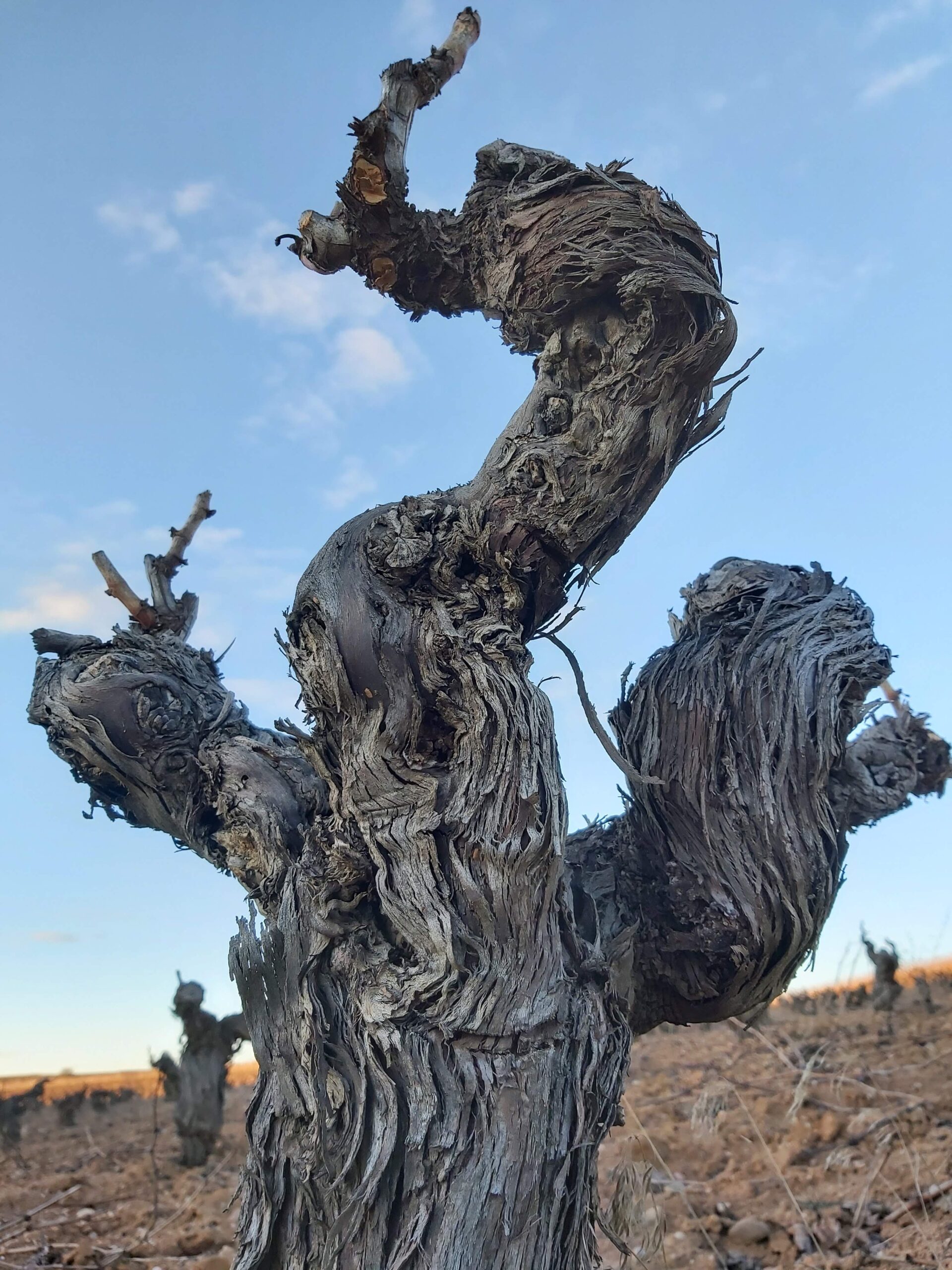
In La Horra there are plots of loose, sandy soils where vines planted before the arrival of the plague went on living as if nothing had happened. While the whole of Europe replanted, here the vines kept bearing fruit on their own roots — ungrafted, as winegrowers say. These are the pre-phylloxera vines: survivors of more than a century.
What makes a century-old vine special
An old vine is not just a historical curiosity. It is another way of making wine. Its deep roots, after decades searching for water, explore layers of soil a young vine could only dream of reaching, which translates into consistency in dry years. Its yield is low — sometimes less than a kilo per vine — but each cluster concentrates what the plant no longer spends on growing. And bush-trained, without trellising, as has always been done in La Horra, it regulates itself with a wisdom that only the years can give.
Our ungrafted vines also preserve Tinto Fino as it was before phylloxera: a living library of the variety that no nursery can replicate.
Our heritage of old vines
At Dominio de Montelahorra, more than half the vineyard is over 50 years old, and we keep century-old vines and pre-phylloxera plots planted on those sandy soils that outwitted the plague, between 800 and 850 metres of altitude. From these plots come our top wines — such as Valezar o El Canto del Ángel — donde el Tinto Fino habla con su voz más antigua.
A legacy that cannot be replanted
You can build a new winery in two years. You can plant a vineyard in an afternoon. What you cannot do is manufacture a hundred-year-old vine: only time can give you that, and time, in La Horra, played in our favour. That is why we say our greatest asset is not in the winery, but buried in the sand.
No Comments